


Natural Remedies for Menstrual Cramps: A Guide to Finding Relief

Posted In
January 30, 2026
Posted On
The goal of every woman dealing with her monthly cycle is to get through it without wanting to curl up in the fetal position with a heating pad and an entire tub of ice cream.
But with intense cramps, bloating, mood swings, and exhaustion, it can be hard to function normally—let alone thrive—during that time of the month.
Oftentimes, we just accept that periods are supposed to be miserable. We pop some ibuprofen, stock up on comfort food, and push through.
Maybe you've been told "it's just part of being a woman" or "just take some Midol and deal with it."
It can make you feel helpless, frustrated, and honestly a little resentful of your own body.
Today, I'm going to share natural remedies and lifestyle strategies that can help you manage menstrual cramps and discomfort without relying solely on pain meds or suffering through it.
I'll cover what's actually causing your cramps, dietary and lifestyle changes that make a real difference, and natural remedies you can start using today.
Keep reading for more details—your uterus will thank you! 💕

What Are Menstrual Cramps and Why Do They Happen?
Menstrual cramps (medically called dysmenorrhea) are those lovely contractions your uterus makes during your period. There are actually two types, and understanding which one you have can help you address the root cause.
Primary dysmenorrhea is the common menstrual cramping that happens without any underlying medical condition. It's caused by prostaglandins—hormone-like substances your uterine lining produces that trigger muscle contractions. The more prostaglandins you produce, the more intense your cramps tend to be. (source)
Secondary dysmenorrhea is cramping caused by an underlying condition like endometriosis, fibroids, pelvic inflammatory disease (PID), or adenomyosis. This type of cramping is usually more severe, starts earlier in your cycle, and lasts longer than typical period cramps.
Here's what you need to know: severe period pain is NOT normal, and you don't have to just live with it! If your cramps are interfering with your daily life, we need to figure out what's causing them.
Download now: Fertility Lab Guide - This free guide can help you understand if your hormones are truly optimal or just "normal"—because hormone imbalances often show up as terrible period symptoms!
Why Managing Menstrual Cramps Matters
Look, I know you already know period cramps are miserable. But let me give you some compelling reasons why addressing them is so important:
Statistics show that severe menstrual cramps affect productivity, mental health, and quality of life for millions of women every single month.
The problem most women face is that they're treating the symptom (pain) without addressing what's causing it in the first place. When you pop ibuprofen every month, you're just masking the issue—not fixing it.
By implementing the natural strategies I'm about to share, you'll be able to reduce inflammation at the root level and support your body's natural hormone balance.
This way, you will experience less pain, more energy during your period, and better overall hormone health.
Also, many of these natural remedies give you the ability to reduce prostaglandin production naturally and support your body's detox pathways (which help clear excess hormones that worsen cramps).
That means you won't have to rely on pain medication every single month or miss work and activities because of debilitating cramps.
Natural Remedies for Menstrual Cramps
If managing period cramps sounds overwhelming, I get it.
There's so much conflicting information out there, and it can feel like you've tried everything already.
So I put together these practical strategies below to break it down for you so you can easily start finding relief.
Strategy #1: Dietary Changes That Actually Work
This is probably the most powerful thing you can do for menstrual cramps—and it doesn't require any special supplements or complicated protocols.
Your diet directly impacts inflammation levels and prostaglandin production, which means what you eat can either make your cramps worse or significantly better.
Here's what to add:
Anti-inflammatory foods are your best friends during your cycle. Think wild-caught salmon, walnuts, flaxseeds, berries, leafy greens, and tomatoes. These foods help reduce the inflammation that makes cramps so intense.
Magnesium-rich foods like spinach, almonds, pumpkin seeds, and dark chocolate (yes, really!) help relax your uterine muscles. Magnesium is absolutely crucial for reducing cramping, and most of us are deficient in it.
Plenty of water throughout the day helps prevent bloating and keeps everything moving smoothly. I know you might not feel like drinking water when you're crampy, but trust me on this one! Herbal teas like ginger or chamomile tea count toward your hydration too. 🫖
Here's what to limit:
Caffeine and sugar can actually worsen cramping and bloating. I know, I know—you want that chocolate and coffee. But try switching to herbal tea and having just a small amount of dark chocolate instead of the whole candy bar.
Processed foods that are high in trans fats and omega-6 fatty acids increase inflammation. During your period week especially, try to stick with whole, real foods as much as possible.
The best way to implement this is to start tracking what you eat in the week before and during your period, and notice if certain foods make your symptoms worse. Then you can adjust accordingly.
Strategy #2: Movement and Exercise (Yes, Really!)
When you're cramping, the last thing you want to do is move your body. But here's the thing: gentle movement actually helps increase blood flow and releases endorphins, which are your body's natural painkillers.
I'm not talking about running a marathon here—I'm talking about gentle, nurturing movement that supports your body.
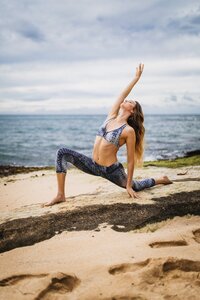
Gentle stretching or movement is incredibly helpful for relieving tension and reducing cramping. Simple stretches like child's pose, cat-cow stretch, or lying on your back with your knees pulled to your chest can provide immediate relief.
For better results, try moving your body for even just 10-15 minutes when you're cramping. You might be surprised at how much it helps!
Walking is one of the best things you can do. It improves circulation without being too intense. Even a slow 20-minute walk around your neighborhood can make a difference.
Swimming (if you use tampons or a menstrual cup) is gentle on your joints and provides natural resistance that feels good when you're crampy.
I had a client who was skeptical about this, but she started doing 15 minutes of gentle stretching during her period and her cramps decreased. She couldn't believe something so simple could make such a difference!
Strategy #3: Stress Management (This is Huge!)
Here's something most people don't realize: stress makes menstrual cramps significantly worse. When you're stressed, your body produces more cortisol, which increases inflammation and worsens pain. (source)
Prayer and quiet time with God can be incredibly powerful for managing stress and pain. When you're cramping and miserable, taking even just 5-10 minutes to pray, read Scripture, and breathe deeply can shift your nervous system from fight-or-flight to rest-and-digest mode.
I love Psalm 139:14 during my cycle: "I praise you because I am fearfully and wonderfully made." Even when our bodies feel like they're betraying us, they're actually doing exactly what God designed them to do!
Progressive muscle relaxation involves tensing and then relaxing different muscle groups. Start with your feet and work your way up to your head. This helps release physical tension that can worsen cramping.
Adequate sleep is non-negotiable. Aim for 7-9 hours, and try to keep a consistent sleep schedule even during your period. Your body needs that rest to heal and regulate hormones.
Do things you enjoy! Read that book, work on your hobby, spend time with friends (if you feel up to it), or binge-watch your favorite show guilt-free. Distraction and joy are legitimate pain management tools.
Heat Therapy and Herbal Remedies
Nowadays, we have so many options for natural pain relief that our grandmothers would have loved!
If you want to reduce cramping naturally, you definitely need to try heat therapy.
Heat therapy works by relaxing the uterine muscles and increasing blood flow to the area, which reduces pain signals.
Here's how to use it effectively:
Heating pads are your best friend during your period. Apply one to your lower abdomen for 15-20 minutes at a time. I keep mine plugged in next to the couch during period week!
Warm baths with Epsom salts provide magnesium absorption through your skin while the heat relaxes your muscles. Add some lavender essential oil and you've got yourself a spa experience. 🛁
Hot water bottles work just as well as electric heating pads and are portable. You can take them to work or use them in bed.
And if the idea of taking pills makes you hesitant, consider trying herbal teas:
Ginger tea has powerful anti-inflammatory properties and can help reduce menstrual pain and nausea.
Chamomile tea has antispasmodic effects that help relax the uterine muscles. It also promotes better sleep, which you definitely need during your period.
Peppermint tea can help relieve bloating and cramping due to its natural muscle relaxant properties.
You can also consider magnesium lotion as magnesium absorbs about 10x better from skin than supplements.
When to Seek Help
I hope this guide on natural remedies for menstrual cramps has been helpful. But here's what's really important: if you take anything away from this post, remember that severe period pain is NOT normal.
If your cramps are interfering with your daily activities, you need more than over-the-counter pain relief, or you're experiencing any of these warning signs, please see a healthcare provider:
- Severe pain that doesn't respond to natural remedies or OTC medication
- Unusual or heavy bleeding (soaking through a pad/tampon every hour)
- Fever or chills during your period
- Unusual vaginal discharge
- Pain that radiates beyond your lower abdomen and back
These could indicate conditions like endometriosis, fibroids, or PIDS that need medical attention.
The best way to get to the root cause of severe menstrual cramps is to work with someone who understands hormones and mineral imbalances at a deeper level. That's where functional testing (like the HTMA I use with my clients) can be a game-changer!
I often find that copper dysregulation is an issue with many women that struggle with painful or heavy periods. Once we get that balanced out, that pain goes away.
Take Control of Your Cycle
Managing menstrual cramps doesn't have to mean suffering through them or relying only on pain medication. There are so many natural options available—from dietary changes to gentle movement to herbal remedies.
Remember, we are all unique, and what works for one woman might not work for another. I encourage you to try different remedies, listen to your body, and find what works best for YOU.
Your body is fearfully and wonderfully made, even when it doesn't feel like it during your period. Give yourself grace, try these natural approaches, and don't be afraid to ask for help if you need it. 💕
So, what do you say? Ready to ditch the ice cream-and-suffering approach and try something that actually addresses the root cause?
Want personalized help? If you're struggling with severe or persistent menstrual cramps, or if you're interested in exploring customized solutions tailored to YOUR specific body, let's chat! Schedule a Fertility Consult and we can work together to get to the root cause of your pain and develop a comprehensive plan for managing menstrual discomfort naturally and effectively.